A Video Essay: Where Are the Limits of Public Power?
↑ The video essay (you can also watch directly on Bilibili)
Epigraph: In my view, whether there is hope for Burma depends on which events in this country can be told, and which cannot. … If I were to write another book about Burma, what I would want to write about is an era in which people raise their own voices, no longer holding fear, no longer worrying about punishment — an exhilarating era in which current events and Burmese history can be openly recorded and openly debated. In short, that story would be about how the people of this country recover their own truth and piece it back together.
—— Finding George Orwell in Burma
Part One: That Social Inequality Exists
After finishing The Legend of Hei last year, my heart could not settle for a long time. At first I thought it was just another animated film with preset opinions, somewhat ordinary. But the collapse of my evaluative framework, and the original impulse to make this video, both came entirely from one exchange:
Xiaohei: “Is Fengxi a bad person?”
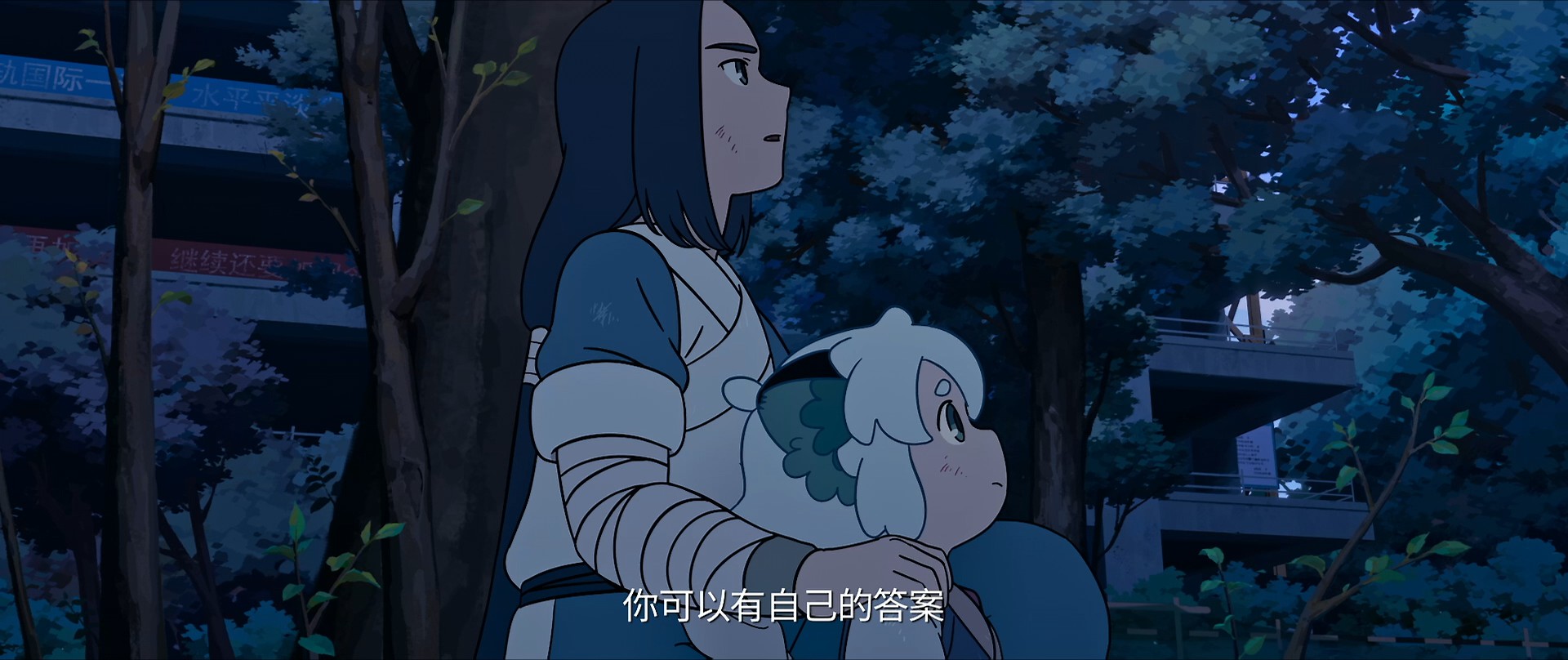
Wuxian: “Don’t ask me. You can have your own answer.”
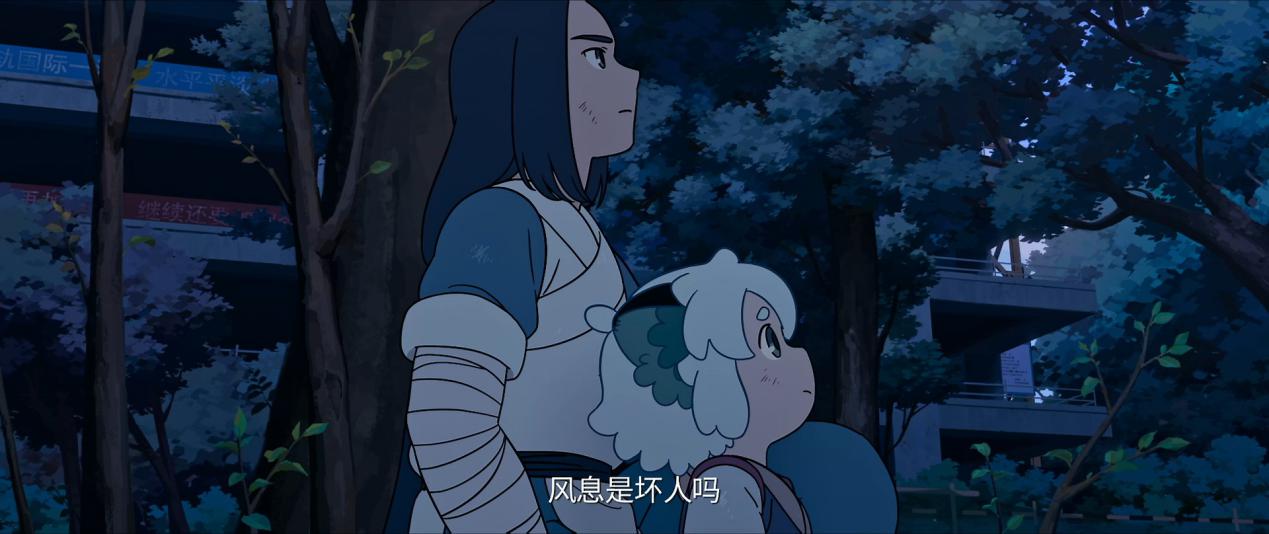
Is Fengxi a bad person?
Before we discuss this, let’s first look at the world of The Legend of Hei.
Xiaohei lives in a world where spirits (yāojīng) and humans coexist, originally without interfering with each other. But as human technology developed, the world of the spirits was gradually squeezed. Some spirits began to accept reality and actively integrate into human society. The Spirit Guild (Yāolíng Huìguǎn) was established by three deities (extremely powerful spirits) including Laojun. But because of the difference in species, a barrier always existed between spirits and humans. The Guild’s role was to help spirits better integrate into human society — and to discipline those spirits who would not fall in line.
Although most spirits could find their place in human society, we can still see in them a longing for their past lives. Psychologists hold that nostalgia is a spontaneous defensive behavior: by recalling pleasant past experiences, one repairs and compensates for negative emotions. The spirits who appear so at home in the city are precisely soothing their longing for their lost homeland through nostalgia. But this longing cannot truly be uprooted — it is rooted deep in the collective unconscious of the spirits, waiting to be awoken. It will not vanish unless truly satisfied. If this is true even for spirits who have successfully integrated, what then of those who, for various reasons (the man-eating clans, their physical forms), cannot integrate into human society? How is the fire of desire in their hearts being suppressed?
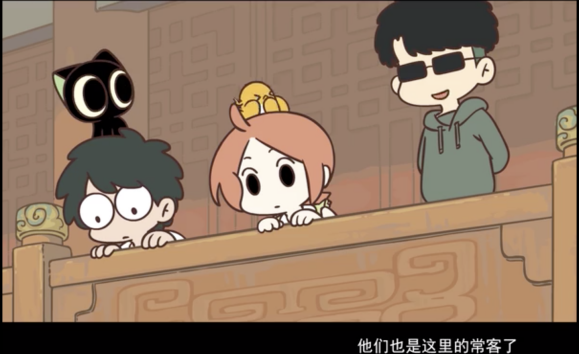


Here (in episode 20 of the TV series), do we not see the inequality between the spirits and human society? Spirits must adapt to human institutions and live by human ways. What Fengxi did was simply externalize this contradiction.
Part Two: That Violent Resistance Can Be Justified
In the world of Hei, we see three attitudes toward this inequality. First, the conservatives represented by Laojun (in the TV series) and Director Kari (TV series), who want to preserve the old order. Second, the gradualist reformers represented by Wuxian and Old Jiu, who sympathize with the spirits’ plight and advocate moderate change. And finally, the radicals represented by Fengxi and Xuhuai, who advocate the violent overthrow of the system and the establishment of a society of equality.
At the end of the film, the alliance of conservatives and gradualist reformers defeats the radicals, preserving the old order from the film’s opening. Xiaohei’s world has not changed in any way; the contradiction remains buried in the heart of every spirit, waiting to be awakened again by whoever comes next. Xiaohei has found a place to belong, but the tragedy of humans destroying spirit homelands continues to play out.
And Fengxi — who raised the question, who represents the progressive force — has been given, by virtue of his villain role in the film, a “reasonable” reason to be despised by the audience.
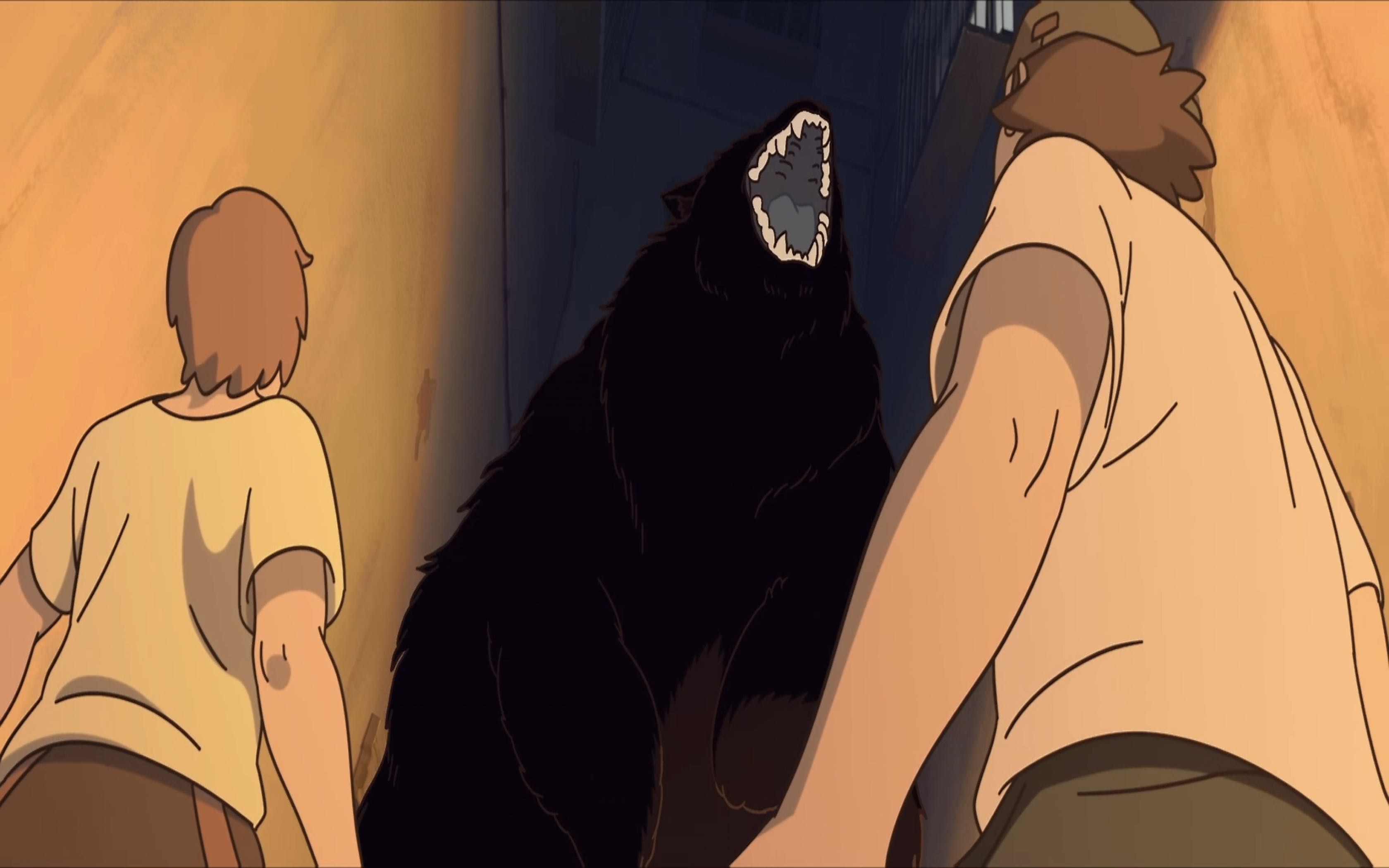
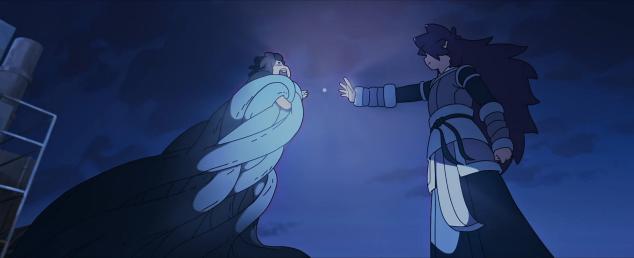
No one in posterity blames Sun Yat-sen for the Wuchang Uprising — for the many revolutionaries lost in the revolution — because people know he was doing the right thing. To bracket Fengxi’s just goals and instead attack only the means he used, then dismiss him entirely on that basis, is clearly unfair to this character and to the values he represents.
Perhaps the pioneer Fengxi had long ago tried the moderate route.
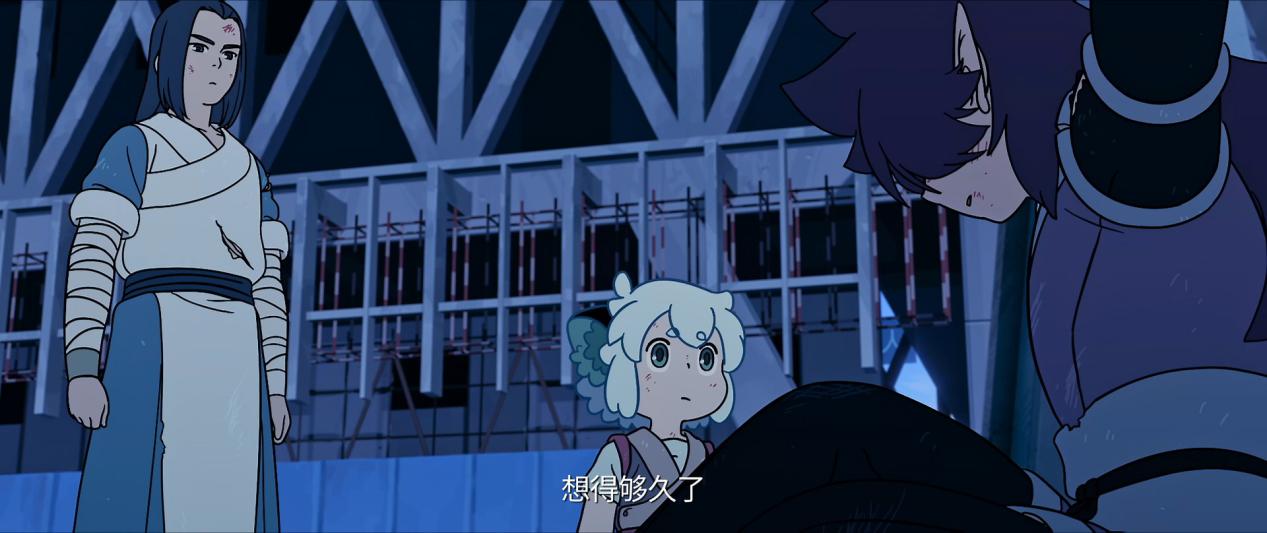
But he discovered that human desire is bottomless — that the spirits would, in the end, lose their last forest. So he chose to resist. Even facing the powerful conservative force of the Spirit Guild, Fengxi raised the banner against the old order, doing what he knew could not be done — like a martyr, using his life to expose the inequality of the system and to awaken the free souls suppressed by the old order.

Old Jiu: “Ah, the road ahead is long.”
As for whether the souls that have been awakened can find another way to change this institutional inequality —
that is a story to be told another time.
Part Three: Where Are the Limits of Power?
Is there another ending we might imagine? This force, after being suppressed by the system for so many years, finally erupts?
The radicals represented by Fengxi use the “Domain” — by violent means, they carve out a spirit kingdom within that Domain, permanently inviolable by humans, forcing humans to acknowledge the legitimacy of the spirits’ existence, and on that basis, building a new mode of equal coexistence between humans and spirits?
This is not the story of The Legend of Hei. This is the French Revolution that established a republic amid monarchies; this is the South African anti-apartheid movement that built equality for the oppressed Black population; this is Israel, the Jewish state that emerged in the cracks of the Arab world.
But will the spirits, having regained the initiative, be satisfied with that balance alone?
Would the desires of the spirits, and their resentment toward humans, allow the “Domain” to remain confined to “Longyou City” alone?
Have we not seen this kind of unsatisfied sentiment again and again throughout history?
(Each of the three examples I just gave was followed, after the revolution, by episodes of extreme and bloody terror.)
Christianity — once persecuted, once an advocate of peace, humanity, and love — after obtaining the status of orthodox religion, repeatedly persecuted heretics on its own. The religion that once resisted the old order, after establishing the new order, suppressed newer religions different from itself. The youth who slays the dragon eventually becomes the dragon. The heretics suffered the same suffering Christians once endured. Replacing one enemy with another — in trying to eliminate inequality, we produce new inequality. The contradiction between spirits and humans has not been fundamentally resolved, and so we are trapped in an infinite loop, the story repeating in cycles of violence. After the old order is destroyed, the new order is slow to be built.
So where did this story go wrong?
The way we take for granted — sacrificing a few to benefit the many — isn’t this precisely how modern social institutions express the citizens’ will? Sacrificing the interests of a small group like Wuxian to protect the interests of the great majority — doesn’t this accord with the principle of democracy?
The philosopher Jeremy Bentham held that:
“Nature has placed mankind under the governance of two sovereign masters, pain and pleasure. It is for them alone to point out what we ought to do, as well as to determine what we shall do. On the one hand the standard of right and wrong, on the other the chain of causes and effects, are fastened to their throne. They govern us in all we do, in all we say, in all we think: every effort we can make to throw off our subjection, will serve but to demonstrate and confirm it. In words a man may pretend to abjure their empire: but in reality he will remain subject to it all the while.”
—— An Introduction to the Principles of Morals and Legislation
Human nature is to pursue pleasure and avoid pain; therefore, pleasure and pain are not only our masters but also the standard by which we make moral judgments. Here the highest purpose of morality is to obtain the greatest aggregate benefit measured in pleasure; in the long run, this may be better for the development of humanity as a whole.
Based on this utilitarian view, one could (during a pandemic) pull the ventilator off an elderly patient and give it to a younger person more likely to survive. One could divert a runaway train onto the track where only one person lies, because the five lives on the other track clearly outweigh the one.
But — is that really right?
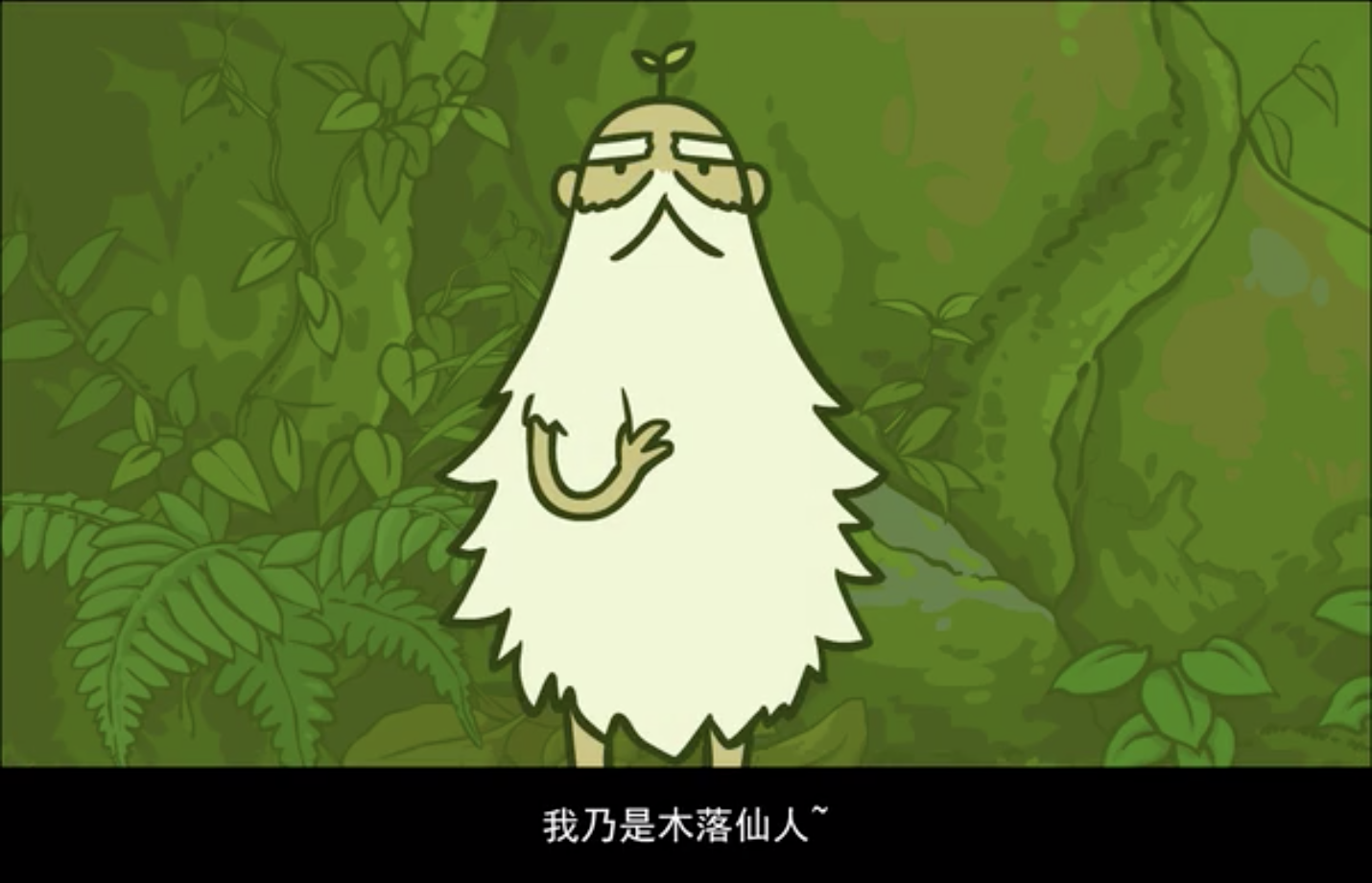

In episode 16 of The Legend of Hei, don’t we see exactly a challenge to this view? A spirit who styles himself the Mu-Luo Immortal occupies the body of a tree spirit in order to survive — because under this view, the life of the more spiritually cultivated Mu-Luo Immortal is plainly worth more than that of a tree spirit, let alone the “expendable” ladybug on a leaf.
Moreover, as subjective beings, can we really, as Bentham claims, quantify the value of any object of comparison? The historian Luo Xin argues:
Where “collective amnesia” once described the counterpart to collective memory — emphasizing the inability to maintain a link with the past due to the limits of memory — what we now want to discuss is active forgetting: forgetting that, for some purpose, actively and consciously severs the link with the past. Book burnings, literary purges, deletions, blocking of sensitive words, censorship — these aim to produce a deliberate, enforced forgetting.
—— The Rebel Who Refuses to Act
So-called history is the result of competition among many value systems, and it tends to conform more to the values of the ruling class, weakening dissenting voices and forming what the communication theorist Noelle-Neumann called the “spiral of silence.” A social moral system then takes shape, guided by the ruling class. The power to make value judgments often falls into the hands of social-interest collectives like the Nazis, giving rise to totalitarianism or populism. Judgments built on such moral standards are necessarily skewed.
Are we not witnessing precisely the influence of social factors on value judgment in the case of homosexuality? In Nazi Germany, marching toward its extremes, homosexuality was deemed incompatible with the ideal Aryan bloodline, and tens of thousands of Aryan homosexuals were sent to Auschwitz. Yet in the twenty-first century, in the wave of pro-LGBT legislation, homosexuality is no longer regarded as a pathology; in 2017 Germany passed same-sex marriage legislation, granting same-sex couples the same social rights as heterosexual couples.
So when our values are being shaped, they are shaped by the social environment we experience, inevitably carrying preset assumptions. In this respect, absolute utilitarianism is not acceptable.
The 19th-century philosopher John Stuart Mill argued:
If the individual and society each have their own particular concerns, they ought each to receive the share that properly belongs to them. The part of life that is generally a matter of individual interest should belong to individuality; the part that is generally a matter of social interest should belong to society.
—— On Liberty
Before a utilitarian society can act upon individual rights, an inviolable barrier should be established to protect the most basic rights and dignity of the human being. Here Mill humanizes Bentham’s utilitarianism, replacing Bentham’s “pleasure-pain principle” with the “full development of the human being” produced by individuality — using the free development of individuality to bring individual happiness while advancing society as a whole. Collectivism and liberalism, doctrines opposed at their roots, meet here in a strange convergence. The barrier they jointly construct is what the early liberal philosopher John Locke called: “natural rights.”
Natural rights are rights derived from natural law in a non-social state. They include the rights to life, liberty, and property — the most basic rights of human beings. Locke held that:
“At the beginning, the things of the world were given to mankind in common, but every individual has a property in his own person; this nobody has any right to but himself. The labour of his body and the work of his hands, we may say, are properly his.” … “The state of nature has a law of nature to govern it, which obliges every one: and reason, which is that law, teaches all mankind, who will but consult it, that being all equal and independent, no one ought to harm another in his life, health, liberty, or possessions.”
—— Second Treatise of Government
Social power originates in the “consent” of free people in the state of nature: each cedes a portion of his natural rights to form an organization that, by contract, works for the public good (much like the Spirit Guild in The Legend of Hei). This organization must not itself be partial; it exists as a purely neutral entity serving the individuals in society. Natural rights, as the foundational guarantee of life and dignity, take precedence over social rights. The meaning of social organizations exists solely in being a tool to protect the natural rights of individuals in society.
In episode 28 of The Legend of Hei, does the example of Niepa not show precisely the respect and yielding of public power before natural rights?


As a member of the man-eating clan, Niepa must eat humans to survive. This survival need plainly violates the Guild’s principle of human-spirit coexistence, but the Guild cannot strip away his right to live. So Niepa becomes a special exception within the Guild — granted an extremely generous space of freedom within the system. (The tiger Fengxi hunts at the opening of the film and the tiger Niepa whom Xiaohei meets in the TV series are likely the same spirit.)
Here, do we not encounter the principle of toleration advocated by modern philosophers Michael Walzer and John Rawls?
Walzer: Toleration can save lives, because intolerant persecution often goes directly for the life. Toleration also allows societies with difference to be inclusive. Toleration makes difference possible, and difference cannot do without toleration.
—— On Toleration, VII
So where is the limit of toleration? Is the line really so clear-cut?
Is Fengxi in the film not precisely the breaking of the barrier between social power and individual power? Society inevitably contains many non-mainstream values, but when an individual holding immense power emerges — a dissenter who could very plausibly do society great harm — can social power still not intervene to any degree against individual power? Should a tolerant society tolerate the most intolerant within it? And how would we even define who is the intolerant dissenter?
Is there a way for us to transcend class, status, and prejudice — to step outside all symbols and labels — and, purely out of human moral duty, lay down a universal social rule with no bias?
The philosopher John Rawls argued that the making of social policy should take place behind an “original position,” that is, behind a “veil of ignorance.” In this purely natural hypothetical state, people are shrouded by the veil of ignorance, unaware of their actual condition and status in real life. Through repeated deliberation and choice behind the veil, completely free individuals enter into the various primal social contracts. From these emerges a universal principle of justice that stands independent of any particular political or moral interest — a principle whose rules must be universal and, to some degree, favorable to the bottom of society. Only in this way can justice be guaranteed universal validity, making justice itself the reason for justice, deontologically impregnable.
But — wait.
As finite individuals, as human beings, can we really detach ourselves from all our identities and obligations to hide behind the veil of ignorance?
The contemporary philosopher Michael Sandel argues:
For the self, identity is constituted by ends already laid down in advance. The agent is more a matter of seeking self-understanding than of summoning the will.
—— Liberalism and the Limits of Justice, p. 75
The self cannot exist prior to its values and ends. It is precisely these values and ends that determine “who I am.” A person cannot choose his self a priori at the level of will. To know who someone is, one must empirically examine his ends and values as a human being.
A person in society is necessarily a finite person; he cannot transcend his own existence. It is precisely the sufferings we have felt that give us our prejudices; what we have witnessed builds up our values, making us each a real, living individual.
So the “human being” is “powerless.” We carry biases. We carry attachments. We can never transcend our own perspective to become an infinite person. Precisely because we are not “omnipotent,” we are human — which is why we must discuss here the “limits between the social and the individual,” reason through the value of justice, and discuss how to mend the imperfections of humanity. That is what gives rise to great thought, magnificent history, and so brilliant a human civilization.
So on a finite human, can the answer to justice never be found?
Part Four: The Tender Power
(Suggested musical accompaniment: “Walking Through Every Corner of the World”)
Don’t we see hope in the dialogue between Xiaohei and Wuxian?
It places its trust in the power of the human being. We are human because we possess the capacity to think. The greatest power we hold is our power of judgment. It encourages us to think, to witness with our own eyes all suffering and injustice, to look upon the world’s crime and punishment with a loving gaze. It does not exalt the discipline of violence, but answers with understanding and tolerance — attempts, from the perspective of the other, to find a way through. It encourages us to follow our own hearts: to recognize that there are no absolute rights and wrongs, and then, holding onto hope and goodness, to make a judgment that is ours alone (rather than following others or the media). That judgment may be wrong; it may take detours. But it corrects itself as it goes, and will, in the end, lead us step by step out of darkness and toward the light.
In the small, finite human being, can we find any power more strong, more tender, than this?
So you, too, can have your own answer.